Novi sits along the I-96 corridor in western Oakland County, where retail power centers, a growing medical-office cluster, and newer light-industrial parks compete for exchange capital. Because most of the city's commercial stock was built after 2000, a Novi replacement candidate often carries a different maintenance and lifecycle-cost profile than the property an exchanger is leaving behind.
I-96 Corridor Asset Stock
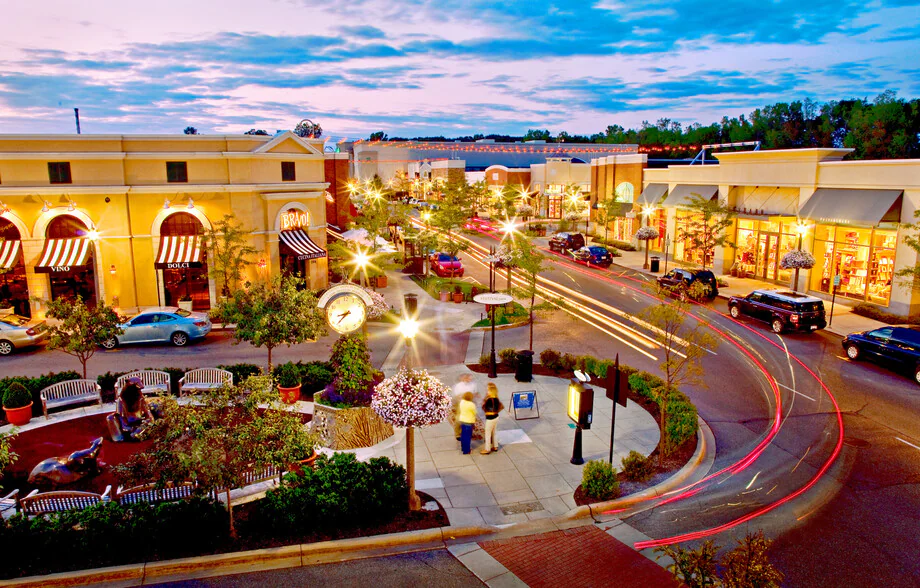
Retail along Grand River Avenue and in the ring around Twelve Oaks Mall trades at a premium basis relative to older Oakland County retail, a premium driven by household income and steady traffic counts rather than redevelopment upside. Office and flex buildings along Haggerty Road and Cabot Drive tend to be single-tenant or small multi-tenant properties built after 2000, with roofs, parking lots, and mechanical systems still inside their first replacement cycle.
That newer-vintage profile matters for an exchanger doing lifecycle-cost math: a Novi flex building may show a lower cap rate than a comparable 1980s building elsewhere in the metro, but it also carries a longer runway before major capital work is due, which changes the real holding-cost comparison over a five- or ten-year period.
Twelve Oaks and Grand River Retail Demand
Providence Park Hospital anchors a medical-office cluster along Cabot Drive that draws exchangers looking for credit-tenant leases with longer terms than typical retail carries, and that cluster has kept vacancy in nearby medical buildings tighter than the office market at large. Grand River Avenue itself carries a mix of national retail pads, service tenants, and smaller local operators.
The Twelve Oaks ring still pulls regional shopping traffic that keeps in-line retail occupancy firmer than in most western Oakland County submarkets, though rents on the best corners now price in that draw, so a replacement buyer is paying for stability rather than for upside.
Property Types Circulating Through Identification Lists
A Novi identification shortlist usually mixes several of the following property types, depending on what asset class the relinquished property came from:
- Single-tenant medical office near the Providence Park campus
- Multi-tenant retail strips along Grand River Avenue
- Class A or B flex buildings on Haggerty Road
- Small-bay light industrial near the I-96 and Beck Road interchange
- Garden-style multifamily built after 2000
Financing Read for Newer-Vintage Suburban Product
Because much of Novi's stock postdates 2000, lenders often underwrite it with lower near-term capital-expenditure reserves than they would an older Oakland County building, which can improve debt-service coverage on a replacement purchase. That advantage is not a secret, though — sellers price to it, and asking rents on the best Novi buildings track replacement cost about as closely as they track trailing cash flow.
An exchanger comparing a Novi candidate against a boot-free replacement should confirm actual in-place rents and lease-term rollover schedules rather than relying on a pro forma summary, since the newer-vintage premium can mask a shorter remaining lease term that changes the debt picture.
Identification Discipline for Fast-Moving Novi Listings
Novi retail and medical-office listings move faster than older Oakland County product, which compresses the working room inside a 45-day identification window. Exchangers should have financing pre-cleared and proceeds already sitting with a qualified intermediary before a Novi listing goes live, since renegotiating loan terms after an identification letter is filed adds risk without adding time.
A realistic Novi search also names a backup candidate from a neighboring submarket in case the lead property falls out of contract during due diligence, so the exchanger is not left choosing between an unreviewed property and missing the 180-day exchange period.
Common 1031 Exchange Questions
How does the 45-day identification window apply to a Novi property search?
The 45-day window starts the day the relinquished property closes and runs on calendar days, not business days. Because Novi retail and medical-office listings can go under contract within a week or two of hitting the market, most exchangers start building a shortlist before the relinquished sale even closes so the identification letter can be filed without a scramble.
Does Novi's mix of retail, medical office, and flex space fit the like-kind rule?
Yes. Like-kind for 1031 purposes covers real property broadly, so an exchanger selling an apartment building can identify a Novi retail strip or medical-office building without a use-type mismatch. The qualified intermediary and the investor's own tax advisor should still confirm the specific asset qualifies as real property under current rules before it goes on the identification list.
Is there enough inventory in Novi to support a full three-property identification list?
Novi's retail and medical-office stock turns over often enough to usually support two or three live candidates at once, though small-bay flex and light-industrial space moves fast and can thin a shortlist quickly. Investors working the three-property rule often pair a Novi candidate with a backup in Farmington Hills or Canton to keep the list realistic.
What happens if your preferred Novi property falls out of contract during due diligence?
If a backup was already named under the three-property rule, the exchanger can move to that candidate without restarting the clock, since identification already happened. If no backup was named, the exchanger needs to check remaining days in the 45-day window before adding a new property, and remaining days can run short quickly on a fast-moving Novi listing.
Who actually holds the sale proceeds while you're searching for a Novi replacement?
A qualified intermediary holds the proceeds from the relinquished sale for the full exchange period so the exchanger never takes constructive receipt of the funds. That intermediary should be lined up before the relinquished property closes, not after a Novi candidate is found, because proceeds touched by the exchanger even briefly can disqualify the exchange.