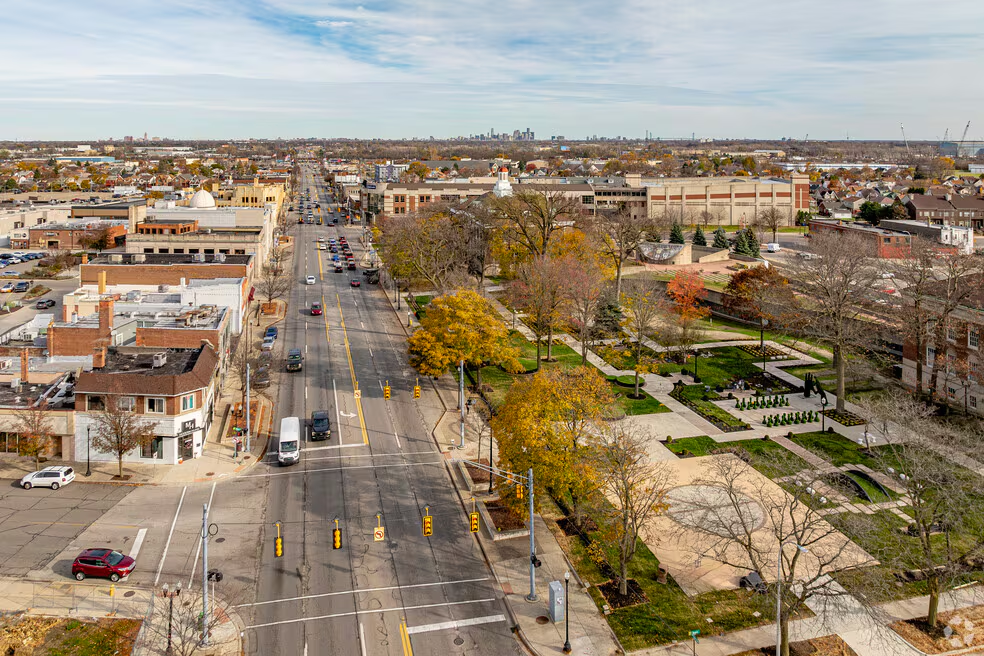
Wyandotte is a small Downriver river city on the Detroit River, and its commercial real estate reflects that scale: a compact downtown along Biddle Avenue, legacy industrial land tied to the former BASF Wyandotte chemical operations, and a modest, working-class retail and multifamily base. This is the smallest and lowest-basis submarket among the metro's core suburbs.
Biddle Avenue and the Detroit River Waterfront
Downtown Wyandotte's Biddle Avenue corridor carries small-footprint retail and service tenants serving a stable, largely local customer base, with pricing well below Royal Oak or Rochester Hills for comparable building types. Riverfront proximity supports some multifamily and mixed-use interest, though at a smaller scale than the lakefront market in St. Clair Shores.
The city's small geographic footprint means very little commercial inventory turns over in a given year, so an exchanger targeting Wyandotte specifically should expect a longer search than in a larger Downriver or Macomb County submarket.
Legacy Chemical-Plant Land and Small-Scale Retail
Large parcels along the riverfront tied to the former BASF Wyandotte chemical operations carry environmental history that any replacement buyer needs documented before closing, and that diligence can take longer than a standard title review. Some of that land has moved toward industrial or logistics redevelopment, trading its chemical-plant legacy for a cleaner current use, but a buyer still needs the environmental record on file.
Outside the legacy industrial parcels, Wyandotte's retail and small-multifamily stock is conventional, working-class product without the redevelopment premium seen in Royal Oak or the office story seen in Southfield.
What Trades in a Small Downriver Market
Wyandotte's limited inventory tends to fall into a narrow set of categories:
- Legacy industrial land with environmental history
- Small-footprint retail along Biddle Avenue
- Modest multifamily near the riverfront
- Service and professional-office space downtown
- Redevelopment-stage logistics parcels
Financing a Modest-Basis Downriver Exchange
Because Wyandotte's basis runs lower than almost anywhere else in the metro, an exchanger moving out of a higher-value relinquished property needs to plan carefully to avoid boot, since a lower-priced replacement and a correspondingly smaller loan can leave a real gap between what was sold and what was bought. That gap is more likely here than in a premium submarket like Troy or Rochester Hills.
Lenders will scrutinize any environmental history on legacy industrial land closely, and financing on those parcels can take longer to close than on conventional retail or multifamily, which matters inside a fixed 180-day exchange period.
Identification Realism for a Thin-Inventory Market
Given how little turns over in Wyandotte in any given quarter, exchangers with a genuine interest in this submarket should start informal outreach to owners and brokers well before the relinquished property closes, rather than waiting to search once the 45-day identification window opens. A three-property list centered on a Wyandotte candidate almost always needs backups from a deeper Downriver or Macomb County market, and those backups should be lined up at the same time, not after the Wyandotte search comes up short.
A qualified intermediary should be engaged early enough to hold proceeds and stand ready the moment a qualifying Wyandotte property surfaces, since a thin market can produce a listing with little advance notice and just as little time before it's under contract again. Waiting until a listing appears to start the intermediary relationship risks losing the property to a buyer who was already prepared.
Common 1031 Exchange Questions
How do you avoid boot if your relinquished property is worth significantly more than typical Wyandotte pricing?
The exchanger needs the replacement property's price and new loan amount to meet or exceed the relinquished property's value and debt; if Wyandotte pricing alone can't reach that number, pairing a Wyandotte candidate with a second, higher-value property on the same identification list is one way to close that gap without taking on unwanted boot.
Does environmental history on legacy industrial land affect the 45-day identification window?
The identification window itself isn't affected — the property can still be named within 45 days — but the environmental review needed before closing on a legacy industrial parcel should start immediately after identification, since that work can take longer than standard due diligence and needs to finish inside the 180-day exchange period.
Is there enough inventory in Wyandotte to support a full three-property identification list?
Rarely on its own — Wyandotte's small footprint and low turnover mean most exchangers can name one Wyandotte candidate at most, filling the remaining identification slots with properties from a deeper Downriver market like Taylor or a Macomb County submarket like St. Clair Shores, since waiting for a second qualifying Wyandotte listing to appear can cost more time than the exchange clock allows.
Who reviews the environmental documentation on former BASF Wyandotte land — the qualified intermediary or someone else?
The qualified intermediary doesn't review environmental documentation; that's the responsibility of the buyer's own environmental consultant and attorney. The intermediary's role stays limited to holding exchange proceeds and preparing the exchange paperwork, so environmental due diligence needs to run as its own separate workstream.
What's a realistic timeline expectation for closing on a redevelopment-stage logistics parcel in Wyandotte?
Longer than a standard retail or multifamily closing, given the environmental and title review legacy industrial land typically requires — exchangers should build in extra time inside the 180-day exchange period and avoid identifying this asset type unless there's genuine confidence the environmental file can be completed on schedule.