Sterling Heights is Macomb County's largest city and one of the metro's core manufacturing suburbs, centered on the Stellantis assembly plant and a dense corridor of supplier and light-industrial buildings along Van Dyke and Mound Road. Lakeside Mall's redevelopment and the Hall Road retail corridor add a second, consumer-facing demand driver alongside the industrial base.
Van Dyke and Mound Road Industrial Base
Industrial product along Van Dyke Avenue and Mound Road ranges from older supplier buildings tied historically to the assembly plant to newer, better-specced flex and warehouse space built for third-party logistics tenants. That range means basis and lifecycle cost vary widely even within a few miles, so an exchanger should treat 'Sterling Heights industrial' as several distinct sub-markets rather than one uniform asset class.
Buildings still leased to auto suppliers carry tenant-concentration risk tied to the assembly plant's own production schedule, which a lender will factor into loan terms differently than a diversified-tenant logistics building.
Lakeside Mall Redevelopment and Hall Road Retail
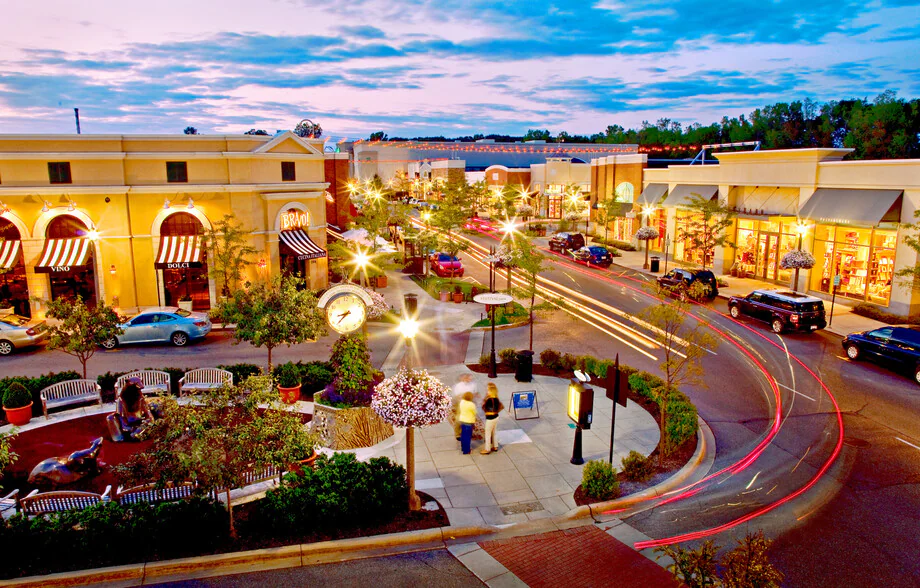
Lakeside Mall's ongoing redevelopment into a mixed-use format is reshaping retail demand along the M-59 corridor, with some standalone retail pads seeing renewed interest as the mall itself is reimagined for other uses. Hall Road remains the area's primary retail corridor and has held occupancy better than the enclosed mall it surrounds.
That redevelopment activity means land and outparcel values near Lakeside are less predictable right now than stabilized retail elsewhere in Sterling Heights, so an exchanger identifying property in this specific pocket should weight recent comparable sales more heavily than older ones.
Property Types Tracking Sterling Heights Manufacturing Demand
An identification list drawn from this submarket typically includes several of the following:
- Supplier-tenant industrial near the assembly plant
- Third-party logistics and flex warehouse space
- Retail along the Hall Road corridor
- Redevelopment-adjacent parcels near Lakeside Mall
- Multifamily serving the city's manufacturing workforce
Underwriting Assembly-Plant-Adjacent Industrial
A lender evaluating a Sterling Heights industrial building leased to an auto supplier will look closely at that tenant's contract relationship to the assembly plant, since a supplier's lease renewal often tracks the plant's own production contracts rather than a standard market lease cycle. That linkage can mean shorter effective lease certainty than the paper term suggests.
Exchangers should also confirm whether ceiling height, floor load, and dock configuration match current logistics-tenant standards, since older supplier buildings built decades ago for a specific auto-parts process don't always convert easily to general warehouse use if that original tenant leaves.
Backup Comparisons for a Macomb County Exchange
Given how tied much of Sterling Heights industrial is to a single employer's supply chain, exchangers often diversify a Macomb County-focused identification list by naming a Warren or Taylor candidate alongside a Sterling Heights property, spreading tenant-concentration risk across more than one manufacturing base. That diversification matters most when the identified Sterling Heights building's only tenant is a direct supplier to the assembly plant.
For retail, Hall Road candidates hold up well as a primary identification target on their own, since that corridor's tenant mix isn't tied to a single manufacturer the way the industrial stock is, and turnover along that corridor has been steady enough to support a search inside a normal 45-day window.
Common 1031 Exchange Questions
How does tenant concentration risk in Sterling Heights industrial affect the three-property rule?
The three-property rule itself doesn't account for tenant risk — it just caps identification at three properties regardless of value — but exchangers concerned about a single auto-supplier tenant often use those three slots to spread across different tenant types, such as a Sterling Heights industrial building, a Hall Road retail pad, and a Warren logistics building.
Does the 45-day window give enough time to review an assembly-plant-adjacent lease?
The 45-day window covers identification, not full lease review, but exchangers targeting supplier-tenant industrial should request the actual lease and any assembly-plant supply contract references as early as possible, since that review can take longer than a standard retail lease review and shouldn't be left until after identification closes.
Is redevelopment land near Lakeside Mall eligible for 1031 treatment?
Yes, undeveloped or redevelopment-stage land qualifies as like-kind real property as long as it's held for investment or business use rather than personal use, though a qualified intermediary and tax advisor should confirm the specific parcel's intended use before it's named on an identification list.
What happens if your Sterling Heights industrial tenant's lease is tied to the assembly plant's own contract cycle?
That's a due diligence issue rather than a 1031 mechanics issue — the exchange rules don't distinguish between tenant types, but the exchanger's own underwriting should treat that lease as carrying more renewal risk than a standard third-party logistics lease, which can affect financing terms and the boot calculation if the loan amount ends up smaller as a result. Requesting the supply contract reference early gives the exchanger time to react before the identification window closes.
How do you compare a Hall Road retail candidate against a Van Dyke industrial candidate on the same identification list?
Both can sit on the same three-property list since like-kind treatment doesn't distinguish between retail and industrial real property, so the comparison comes down to financing terms, tenant risk, and lifecycle cost rather than any exchange-rule difference between the two asset types. Running both through the same underwriting checklist keeps the comparison honest rather than favoring whichever property is easier to picture.